Contents
Ukraine, 01010, m. Kyiv, Arsenalna Square, bldg. 1-B
+38 (067) 453-31-61
Monday to Friday, 9:00 AM - 6:00 PM
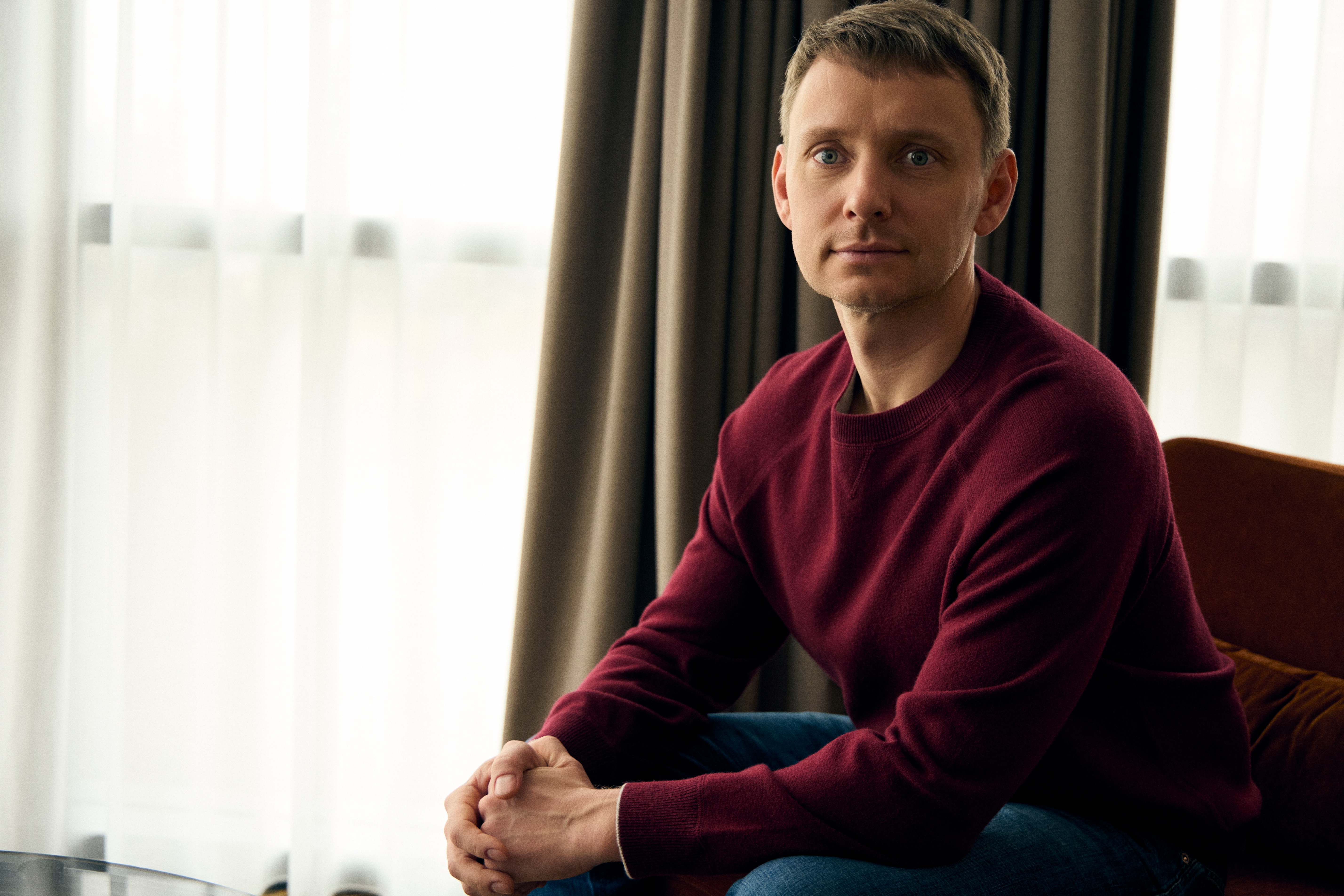
Oleksandr Katsuba: Missiles, Workforce Shortages, and "Dormant" Licenses — What Is Happening in the Gas Industry
7.6.2026
Read time —
00
Four years have passed since the start of the full-scale invasion. Ukraine's gas industry has learned to operate under constant risk, but it now faces new challenges: from a workforce shortage to a global logistics crisis. We spoke with Oleksandr Katsuba, owner of the company ALFA GAS, about how private production survives and why "energy independence" carries a bitter aftertaste.
Oleksandr Katsuba is someone who has seen the system from the inside (as deputy chairman of NJSC Naftogaz of Ukraine) and is now building his own private production business. Why Ukraine has still not become a "European Norway," how businesses protect their facilities under constant attacks, and why the "2050 Strategy" looks like science fiction today — all this in our extended interview.
The Economics of Risk
Over the past two years, the gas sector has turned into a zone of permanent operational extremes. Strikes on infrastructure have become routine, and investments in security have become a mandatory condition for survival.
— Oleksandr, it's 2026. Four years of full-scale war have passed. How has the market structure transformed over this time? Hasn't gas production in Ukraine become "charity work," given the astronomical costs of autonomy and protection?
OK: The market structure has demonstrated remarkable resilience. Globally, nothing has changed: there are the top five major players who hold the bulk of the volume. They keep drilling, investing, and conducting seismic surveys. The market has clearly segmented by investor psychology. Those who believed in the country and had assets here before the invasion continue to work. Those who were afraid to enter before are even more afraid now. A simple law applies here: the higher the risk, the bigger the potential payoff. But it's a payoff you have to claw out amid the chaos of war.
— Security is now the key issue. Which technological solutions — anti-drone systems, concrete "sarcophagi" — have proven most effective for protecting production sites?
OK: There is no such thing as full physical protection for a gas facility. You can't guess where the next missile will land. Strikes happen on average once every two weeks. It's like throwing lit firecrackers at a gas station with open fuel canisters standing around. We deliberately decided against our own anti-drone systems. Why? Because such a system itself becomes a magnet for missiles. On top of that, the bureaucracy around this issue is still impenetrable: you have to get a military unit assigned, obtain stacks of permits... The state has yet to offer a transparent mechanism for a business to officially buy itself a "subscription" to protection by air defense forces (laughs).
— So how do you protect your people and your production?
OK: Our recipe is concrete and redundancy. At every gas treatment unit (GTU) we have built full-fledged bomb shelters. That's the baseline. As for the hardware — we've switched to a "double inventory" strategy. Since equipment manufacturing lead times have grown from 3 to 11 months, we keep a 100% reserve. Roughly speaking, if there's a working "machine" running at the field, an identical new one sits disassembled in the garage. If there's a hit, we simply rebuild the facility from scratch. We look at the sky, pray to God, and keep spare equipment on hand. There's no other way in 2026.
Resource Potential: Myths About Independence and "Dormant" Riches
For the third year now, Ukraine has effectively been reporting "energy independence" due to the absence of gas imports. But behind the pretty numbers lies the alarming reality of industrial giants standing idle.
— Ukraine has been reporting independence from gas imports for the third year. Is this a sign of strength or a symptom of our industry's illness?
OK: First of all, there actually was some import this winter. Secondly, this is, unfortunately, about a patient in a coma. Yes, we hardly buy any gas abroad, but it's not because we've started producing several times more. It's a consequence of the stagnation of heavy industry. When the power is out 50% of the time, factories simply don't consume gas.
— Which industries have had the biggest impact on consumption?
OK: Chemical plants, metallurgical complexes — they are either destroyed, mothballed, or running at minimum capacity. In four years, not a single new large plant has opened. We are "independent" only because our economy consumes far less than it would in peacetime.
— You have repeatedly called for an audit of 200 "dormant" fields. It's 2026 — has anything changed?
OK: Practically nothing. This is my biggest pain point for the industry. More than 200–300 licenses remain "dormant." Their owners do nothing: no drilling, no seismic work. They are just assets "on paper." The audit that was so widely discussed happened only on a formal level. From inside the market, we can see clearly who is actually working and who is just holding a piece of paper hoping to resell it. The state needs political will — to revoke these licenses and put them up for open, transparent auctions. The top ten market players are ready to buy them tomorrow, invest money, create jobs, and deliver real gas to the system. So far, that push hasn't come.
— And what about the Black Sea shelf? Is there hope of returning to offshore production?
OK: I'll be a realist — the shelf can be forgotten for the coming years. And it's not just about the mines. We have no fleet of our own, no offshore drilling rigs, no aviation for logistics. Everything Chornomornaftogaz had either remained in occupied Crimea or was destroyed. Today, Chornomornaftogaz is an office in Kyiv with no real capacity. To start production near Odesa, you'd have to build the entire infrastructure from scratch. That's billions of dollars. Ukraine doesn't have gigantic deposits like Norway's that would let it pay off quickly. No investor will go where the cost of production exceeds the market price of gas.
The World Against Ukraine?
The global confrontation between the US and China and the internal demographic crisis are creating new challenges for Ukrainian subsoil users.
— How does the rivalry between the US and China affect your business? Are you feeling a shortage of equipment or electronics?
OK: Politically, this rivalry barely touches us, but logistically it's a nightmare. Shipping a compressor from the US used to take a month; now it takes four. We've learned to maneuver. For example, we buy Chinese pipes — and there are no complaints whatsoever about their quality. We source electronics wherever they're available faster. Business adapts. The main problem isn't whose equipment it is, but how to get it delivered across blocked or complicated borders.
— And what about people? Where do you find engineers and drillers while mobilization continues in the country?
OK: This is a critical issue. But I've noticed an interesting trend: mass emigration stopped after the first year. Those who wanted to leave have left. The rest stayed. Our entire industry has been under reservation [exemption from mobilization] from day one, so we retain our personnel. But now a major "internal migration" has begun — from state companies to private ones.
— Why are specialists fleeing Ukrgazvydobuvannya or Lvivgazvydobuvannya to join you?
OK: Because private business offers not just higher salaries, but a different culture. We offer a horizontal structure with no bureaucracy and no "work for work's sake." A young engineer wants to see results, not write reports for officials. We have well-developed direct communication, a clear career ladder, and no rigid hierarchy. That's our main trump card in the battle for talent.
Business, Communities, and the Future of Energy
The gas business is often viewed with suspicion by local communities. Yet it is precisely the production companies that have become the main donors to local infrastructure during the war, and energy development is increasingly seen as a matter of security.
— Has the industry become cleaner? Have the "manual" license distribution schemes you warned about earlier disappeared?
OK: The industry has become clean on a systemic level. The auction system truly works: whoever offers the bigger check wins. No "hidden traps." New licenses are bought by sound market players. The only problem is those old "dormant" assets I mentioned. Transparency is still lacking there.
— What does your cooperation with local communities look like? Are people still afraid of hydraulic fracturing?
OK: We work mainly in the Poltava region, and I can say that gas has become "socially acceptable." We build roads, repair schools, help communities. And these roads are high-quality — they last for years. As for the environment — I personally monitor every site. This is my country; I'm not going to litter here. The myths that fracking makes water disappear from wells or kills birds are just fairy tales for the uninformed. We work to the highest standards, because we live here.
— You called the "2050 Strategy" abstract. What is your plan for 2030?
OK: A 30-year strategy in a country where the planning horizon is a week looks strange. A plan for 2030 is more achievable and should be extremely simple. First — a subsoil audit: transfer all non-operating licenses to real investors. Second — deregulation: simplify grid connections. Right now an investor can wait a year to get electricity connected to a new facility. That's absurd. Third — energy efficiency: home insulation, heat pumps, biofuel.
— The question of gas prices for households. Is it time to move to a market in 2026?
OK: This is a very painful question. Around 15% of working-age men are at the front, women are carrying families on their own, and roughly 40% of the adult population are pensioners. Moving to a full market now would mean a social explosion. It's the responsibility of the government and parliament to find a balance between subsidies and market prices. My job as a businessman is to drill, produce, and pay taxes honestly. Political decisions are up to the authorities.
— You provide a lot of support to the Armed Forces of Ukraine. You've said it's the best investment. Why did you focus on vehicles?
OK: I have a media business — AvtoTsentr. We know everything about cars. Over four years, we have handed over more than 130 vehicles: from pickups to trucks and engineering equipment. The army's needs change daily, but "wheels" are always needed. Every hryvnia invested in a vehicle for the Armed Forces is a guarantee that my business — and my country — has a future at all. If there are no Armed Forces, there will be no gas, no licenses, no strategies. That is the one axiom of 2026.
What's new?
Thank you! Your submission has been received!
Oops! Something went wrong while submitting the form.
More News


